
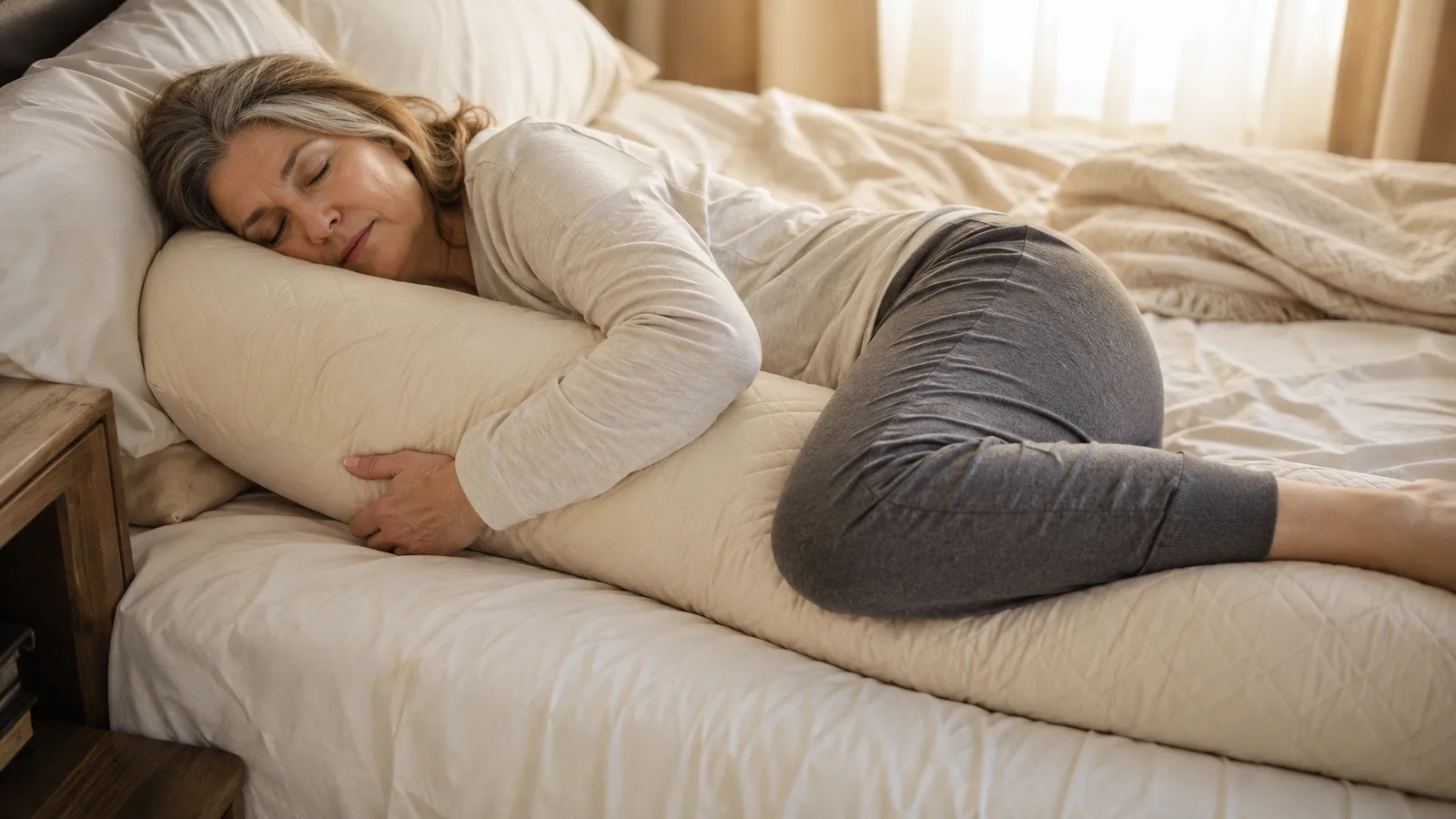
I've worked night shifts in critical care for twenty three years, and my right hip has kept a running tally of every one of them. It's the side I favor when I sleep, the side that carries most of my weight when I'm standing at a bedside for twelve hours, and by the time I get home some mornings it aches enough that lying down doesn't actually feel like relief. I'm Shavit Friedman, and for most of that career I slept the way a lot of side sleepers do, with a regular pillow wedged awkwardly between my knees and nothing supporting my shoulder or my arm.
Six months ago I finally bought the Oubonun Premium Adjustable Loft Quilted Body Pillow, the 21 by 54 inch one with the zippered shell you can open to add or remove fill. My daughter had been telling me for over a year that a real body pillow, not a rolled up blanket or a spare bed pillow, would change how I slept on my hip. I was tired enough of the ache to finally listen. This is the long version of what six months of nightly side sleeping with the Oubonun has actually looked like, hip pain, shoulder pain, and all.
The Quick Verdict
A genuinely well built body pillow that held its loft through six months of nightly use and noticeably eased the pressure points that used to wake me, with tradeoffs around size and how it fits on a smaller bed.
Amazon Check Today's Price →Waking up with a stiff hip every single morning, no matter how you rearrange your pillows?
The Oubonun body pillow is what finally gave my hip and shoulder something to actually rest against instead of the mattress. Check today's price on Amazon and read the current reviews for yourself.
Amazon Check Today's Price on Amazon →How I've Used It
My sleep schedule doesn't look like most people's. I get home from a twelve hour shift a little after seven in the morning, and I'm trying to fall asleep on my right side while my hip is still complaining from a full shift on my feet. I started using the Oubonun body pillow in January, right after a stretch of five shifts in a row left me popping ibuprofen before bed just to get comfortable enough to drift off. I'm 5'4", and at 54 inches long the pillow runs nearly my full body length, which mattered because my old setup only ever supported my knees and left my shoulder pressing straight into the mattress.
I hug it the way most side sleepers end up hugging a body pillow, top end tucked under my head and shoulder, middle section between my arms, and the bottom length running between my knees and ankles. On nights I'm working, I use it the same way when I get home to sleep during the day, and on my days off Danny jokes that the pillow has become a permanent third occupant of our bed. I don't fight him on it. After twenty three years of shift work, anything that actually gets used every night without me having to think about it earns its spot.
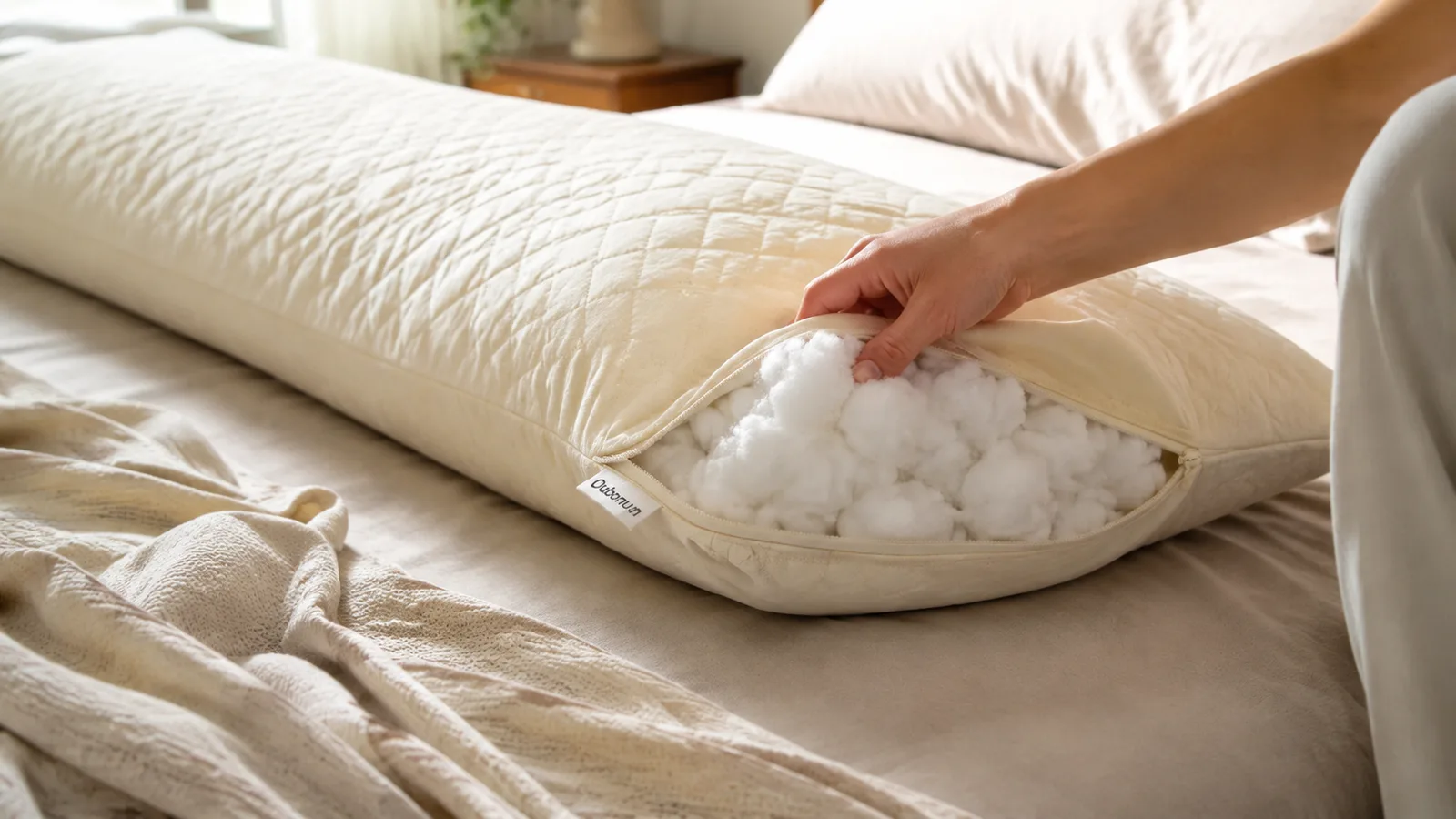
The zippered shell is what convinced me to try this one over the cheaper body pillows I'd looked at before. Within the first two weeks I unzipped it and pulled out a couple of handfuls of the down alternative fill because it felt slightly too firm under my shoulder, and that adjustment alone made a real difference. Being able to dial in the loft myself instead of living with whatever firmness it shipped with is the single feature that's kept me using it consistently.
The Fill and Loft: What Adjustable Actually Means Here
This is the part Oubonun got genuinely right. The shell is quilted, which keeps the down alternative fill from clumping into lumps or sliding to one end the way I've seen happen with cheaper unquilted pillows. Out of the box it arrives on the firmer, fuller side, and Oubonun clearly designs it that way on purpose so you have somewhere to go when you open the zipper and remove fill rather than needing to add more, which most people won't have extra of lying around.
Where it gets more honest is that finding my ideal loft took a bit of trial and error. I pulled out fill twice over the first month, a little at a time, before I landed on something that cradled my shoulder without letting my hip sink all the way through to the mattress underneath. If you're expecting a pillow that's perfectly dialed in on night one, it's worth knowing that some adjustment is part of the process, not a sign anything is wrong with it.
Washing has been simple enough. The outer quilted shell comes off the Oubonun pillow and can be machine washed on gentle, and I've done that every few weeks since it's on my bed nightly. The inner fill core I've only spot cleaned, since the packaging recommends against fully washing it too often to protect the loft. After six months of near daily use, the fill hasn't gone flat or shifted unevenly, which is more than I can say for the last body pillow I tried years ago.
What I Tried Before This One
I want to be fair about the alternatives, because I went through most of them before landing on the Oubonun. A rolled up bath towel between my knees was my go to for years, and it helped my hip alignment somewhat but did nothing for my shoulder or the arm I sleep on. I also tried sleeping with a regular bed pillow hugged against my chest, which felt better than nothing but had no structure and flattened out completely by the middle of the night.
Before this, I also tried a cheaper U shaped body pillow a coworker recommended for pregnancy sleepers. It supported my back well when I slept on it, but it was too bulky for how I actually move overnight, and I kept waking up tangled in the extra fabric. The Oubonun is the first pillow that addressed my whole side, hip to shoulder, in one long piece instead of one small patch of support, and that's the reason I stopped shopping for anything else after the first few weeks.
Size, Firmness, and How It Holds Up Across the Bed
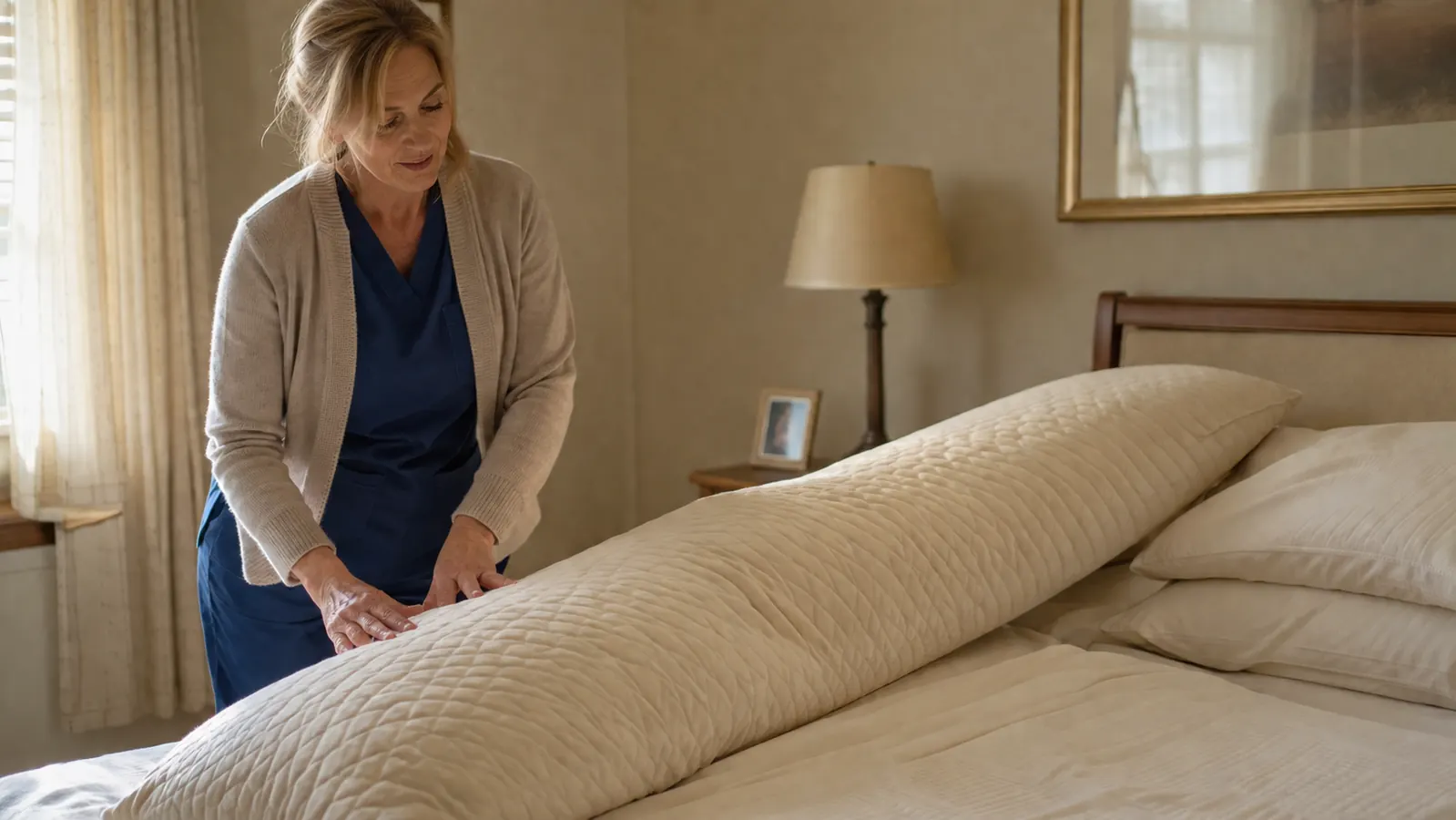
The 21 by 54 inch size I bought runs the length of nearly my whole body, which is generous enough that it takes up a real share of the bed. On our queen mattress, Danny has grumbled more than once about losing his usual side of the bed to a pillow, and if you're sharing a smaller bed with a partner, that's worth factoring in before you buy. We've solved it by me sleeping closer to my edge with the pillow angled diagonally, which honestly works better for both of us than fighting over inches every night.
The firmness after adjusting the fill has stayed consistent, which was the thing I worried most about going in. My last body pillow, a different brand entirely, went noticeably flatter within two months of nightly use. The Oubonun still springs back after I fluff it in the morning, six months in, and I haven't needed to add fill back or make any further adjustments since that first month of dialing it in. For a pillow that's under real weight and pressure every single night, that kind of loft retention is exactly what I was hoping for and didn't fully expect to get.
Hip and Shoulder Pain After a Twelve Hour Shift
After twenty three years in an ICU, my hip and shoulder don't reset the moment my shift ends. There's a particular kind of ache that builds over twelve hours of moving fast between rooms, and it doesn't switch off just because I've walked through my own front door. Sleeping during the day, when I'm already stiff and sore from the shift I just worked, made settling into a comfortable side position genuinely difficult for years before I found something that gave my hip and shoulder actual support instead of just a soft surface to press into.
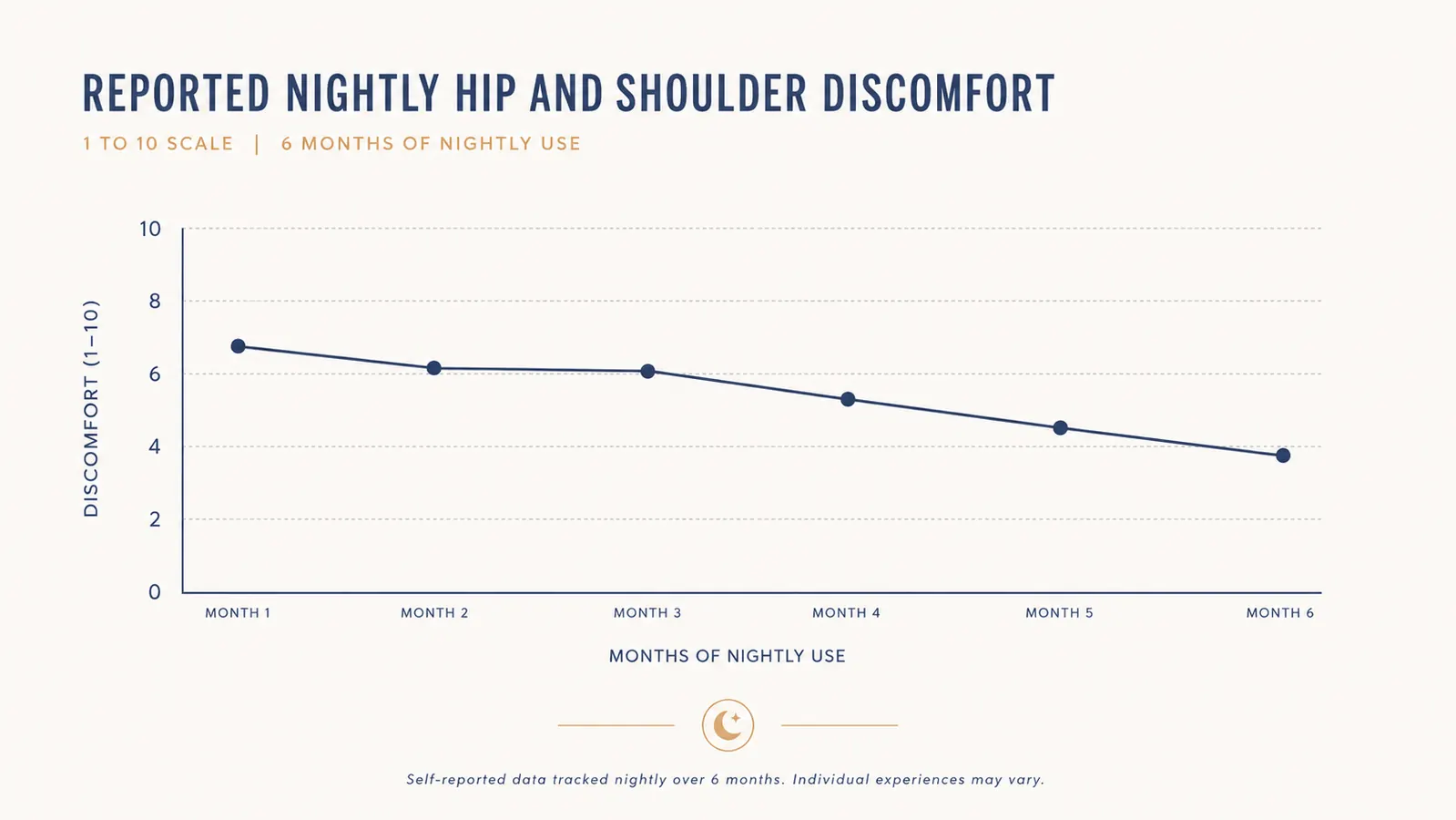
I'm not going to claim the Oubonun body pillow fixed anything medical, and I'd never suggest a pillow can resolve a real underlying joint issue. What I can say is that as part of my wind down routine, a pillow that keeps my spine roughly aligned and gives my top knee somewhere soft to rest instead of sinking straight onto my other leg has made falling asleep after a hard shift noticeably easier. I keep a loose notebook by my nightstand, the same one I used when I was tracking my sleep before, and the mornings I've woken up with real hip stiffness have dropped from what felt like most days down to maybe once or twice a week.
My go to routine now is pulling the Oubonun pillow into position the moment I lie down, top knee resting on the lower length, shoulder tucked against the upper section, arm draped over the middle. On the roughest stretch of five shifts in a row back in February, having that same consistent support waiting for me every morning was one less thing my body had to fight through before it could actually rest.
Where the Oubonun Body Pillow Falls Short
The size that makes it so supportive is the same thing that makes it a real space commitment. On a full or queen bed shared with a partner, it takes up enough real estate that you'll need to work out a sleeping arrangement, and if you're on a smaller bed already this might not be the right fit at all. It's also worth knowing that the initial firmness out of the box runs on the firm side, so budget a little patience for the first couple of weeks while you unzip and adjust the fill to your own comfort.
The zipper, while genuinely useful for adjusting loft, is also something I've had to be a little careful with. I caught the quilted shell fabric in it once while resealing it after pulling out fill, which was more annoying than damaging, but it's a small thing worth being mindful of. And because the fill core isn't meant for frequent full washing, if you tend to sweat a lot at night you'll want to rely on a pillowcase or protector between washes rather than expecting to toss the whole thing in the machine regularly.
What I Liked
- Adjustable loft through the zippered shell let me dial in the exact firmness my hip and shoulder needed
- Full body length gives real support from shoulder to knee, not just a knee wedge
- Held its loft with no noticeable flattening after six months of nightly use
- Quilted shell washes easily and hasn't clumped or shifted unevenly
- Genuinely reduced how often I wake up with hip stiffness after a twelve hour shift
Where It Falls Short
- Takes up significant bed space, which can be a real adjustment for couples sharing a smaller bed
- Arrives firmer than expected out of the box, so plan on a short adjustment period
- Inner fill core isn't meant for frequent full machine washing
- Zipper needs a careful hand when resealing after adjusting fill
- Not a substitute for addressing a real underlying joint or medical issue
The first morning I sat up and my hip didn't immediately protest, I actually stayed sitting on the edge of the bed for a minute just noticing the absence of it.
Who This Is For
Lifelong side sleepers are the obvious fit, but I'd broaden that a bit further after six months of use. Shift workers who spend long stretches on their feet and feel it in their hips by the end of a shift, anyone managing shoulder discomfort from sleeping on the same side every night, and people who've outgrown a simple knee pillow but don't want the bulk of a full pregnancy style pillow all seem like a natural match for the Oubonun. If your current setup is a rolled towel or a spare bed pillow wedged wherever it'll stay, you'll likely notice a real difference within the first couple of weeks, the same way I did.
Who Should Skip It
If you and a partner already have a tight fit on a full size bed, a 54 inch body pillow is going to make that tighter, not easier, so it's worth measuring your actual sleeping space before you buy. People who sleep mostly on their back or stomach won't get the same benefit, since the whole design is built around the side sleeping position. And if you're not willing to spend a couple of weeks adjusting the fill to your own firmness preference, the out of box loft might feel firmer than you'd like at first, so it's worth going in with that expectation rather than being surprised by it.
Six months in, this is the one pillow that actually gave my hip somewhere real to rest.
If side sleeping has you waking up stiff no matter how many pillows you stack, see Oubonun's current price and reviews on Amazon before you buy another one that flattens out in a month.
Amazon Check Today's Price on Amazon →